
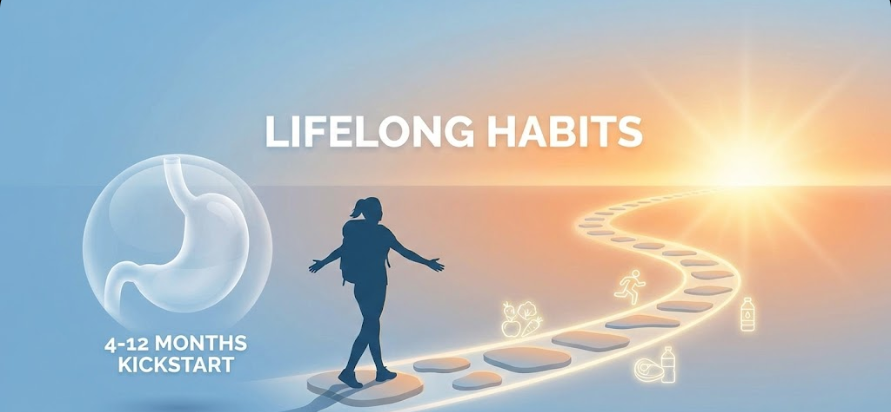
When it comes to achieving significant weight loss, traditional dieting and endless hours at the gym can feel like a losing battle. That’s why so many people are turning to innovative, non-surgical options like the intragastric balloon. This temporary device offers a fantastic kick-start, providing the structure and physical limitation you need to adopt healthier eating habits and build momentum toward your goals.
The concept is simple: a deflated balloon is inserted into your stomach and then filled with a saline solution. It takes up space, making you feel fuller faster and reducing overall food intake. It sounds almost magical, but it raises a crucial, practical question for anyone considering this journey: How long does the gastric balloon last? The answer isn’t a simple fixed number of months. Instead, the lifespan depends entirely on the specific type of balloon chosen, each designed to fit different lifestyle needs and weight loss goals.

Understanding the Different Types of Intragastric Balloons
The term “gastric balloon” actually refers to a family of different devices, each with its own approved duration for use. Deciding on the best option means understanding these timelines, as they dictate not only the treatment duration but also the commitment required for follow-up procedures.
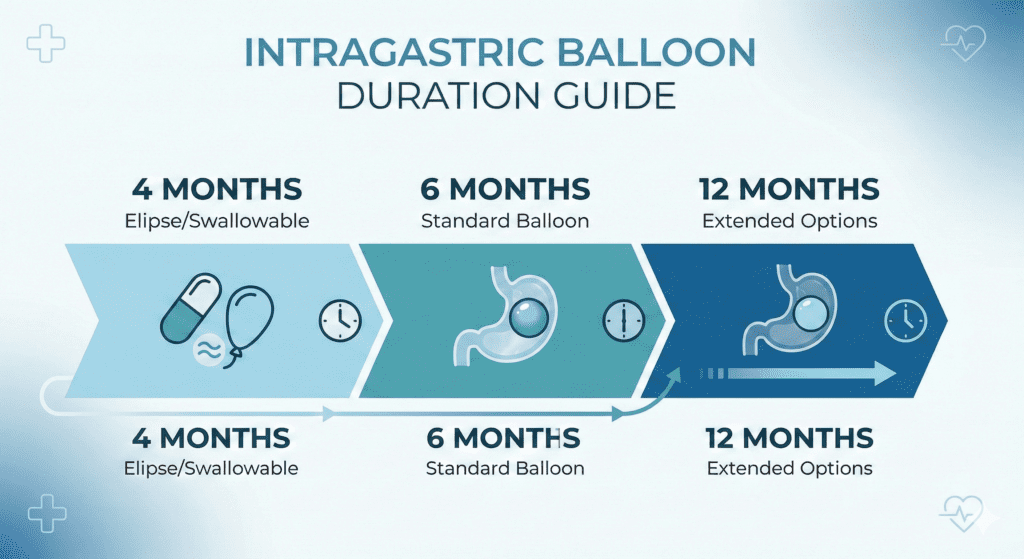
The standard options generally fall into two categories: the six-month balloon and the twelve-month balloon. However, newer technology has introduced a third, often appealing, category: the swallowable balloon.
The Standard Six-Month Balloon
Most well-known gastric balloon systems (like Orbera) are designed to stay in place for six months. This timeframe is scientifically calculated to maximize weight loss while minimizing the risk of complications associated with long-term foreign body presence in the stomach.
Why six months? By the half-year mark, the balloon has served its primary purpose: helping you lose a significant amount of weight (often 30 to 45 pounds, depending on starting weight) and cementing new, smaller portion habits. After six months, the materials begin to degrade slightly, and the risk of complications or balloon deflation increases. To ensure safety and efficacy, the balloon must be endoscopically removed by a physician during a brief, non-surgical procedure.
The Extended Twelve-Month Options
For individuals needing a longer support system to achieve their weight targets, some specialized gastric balloon systems (like Reshape or certain dual-balloon systems) are approved for up to twelve months. These balloons are typically engineered with more durable materials designed to withstand the acidic environment of the stomach for a longer period.
The advantage of a 12-month program is the extended window for behavior modification. It provides more time to adapt to new foods, find a sustainable exercise routine, and fully integrate those changes into your life before the physical limitation of the balloon is gone. Like the six-month option, removal must be performed endoscopically.
The Swallowable, Procedure-Free Balloon
A truly revolutionary advancement in the field is the swallowable balloon (Elipse is a well-known example). This is the shortest-term option, lasting only about four months (16 weeks).
The key difference with this type is the insertion and removal process. The balloon is swallowed as a capsule attached to a thin catheter. Once in the stomach, it’s filled via the catheter, which is then removed. Crucially, at the end of its four-month lifespan, a valve automatically opens, the balloon deflates, and it passes naturally through the digestive tract. This means there is no need for endoscopy for insertion or removal, making it a truly “procedure-free” option. While the duration is shorter, it offers a quick, intense period of weight loss support without requiring sedation.
Weight Loss Timeline and What Happens After Gastric Balloon Removal
Understanding how long does the gastric balloon last is only half the battle. The true success of the program isn’t measured by the time the balloon is inside you, but by what happens after it’s removed.
The primary weight loss period occurs while the balloon is in place. You will see the most dramatic results in the first few months as your body adjusts to smaller portions and fewer calories. During this phase, patients work closely with nutritionists and support staff to restructure their relationship with food.
Why Removal is Not the Finish Line
Whether your balloon lasts four months or twelve, the removal procedure marks the beginning of the maintenance phase. When the balloon is removed, the physical restriction is gone, and the stomach capacity returns to normal. This is the moment where commitment to the established habits truly matters.
Studies consistently show that patients who fail to maintain their results post-removal often revert to previous habits, leading to weight regain. The balloon is simply a tool that provides a temporary mechanical advantage; it doesn’t fundamentally change your metabolism or your cravings.
Maximizing Results After Gastric Balloon Removal
To ensure that the 4, 6, or 12 months you spent with the gastric balloon weren’t wasted, focusing on long-term sustainability is critical.
- Habit Reinforcement: The most successful patients treat the balloon period as “training camp.” They have learned to recognize true hunger signals versus emotional hunger and have established a consistent routine of eating small, frequent, nutrient-dense meals. This routine must continue indefinitely.
- Consistent Movement: Physical activity is non-negotiable for long-term weight maintenance. Establishing an exercise routine while the balloon is in place makes it easier to keep that momentum going once it’s gone.
- Ongoing Support: Many clinics recommend continuing check-ins with a nutritionist, and often a behavioral therapist, for at least six months to a year after removal. This accountability and professional guidance help navigate plateaus and setbacks that inevitably occur.
The simple question of how long does the gastric balloon last has complex answers, ranging from four months for the self-deflating types to up to twelve months for extended endoscopic options. No matter which device you choose, the balloon is a powerful but temporary catalyst. Its duration provides a crucial window—a period of 4, 6, or 12 months—to reset your relationship with food, establish sustainable habits, and achieve significant initial weight reduction. Ultimately, the true success and permanence of your weight loss journey depend not on the balloon’s lifespan, but on the enduring healthy choices you commit to making after the device is removed.