

The journey toward significant weight loss can feel overwhelming, especially when diet and exercise alone haven’t delivered the lasting results you need. If you are exploring surgical options, you have likely heard of the Gastric Band, often recognized by its brand name, the Lap-Band. This procedure offers a unique, adjustable approach to bariatric surgery, providing a tool to help control portion sizes and manage hunger.
Deciding on any major surgery requires careful consideration and reliable, simple information. Unlike more complex metabolic procedures, the adjustable Gastric Band does not involve cutting or stapling the stomach or rerouting the digestive tract. It is designed to be less invasive while still providing the necessary restriction to facilitate long-term weight management. Understanding how this specific method works and the commitment it requires is the first crucial step in determining if it fits your life and health goals.
The Basics of the Lap-Band Procedure
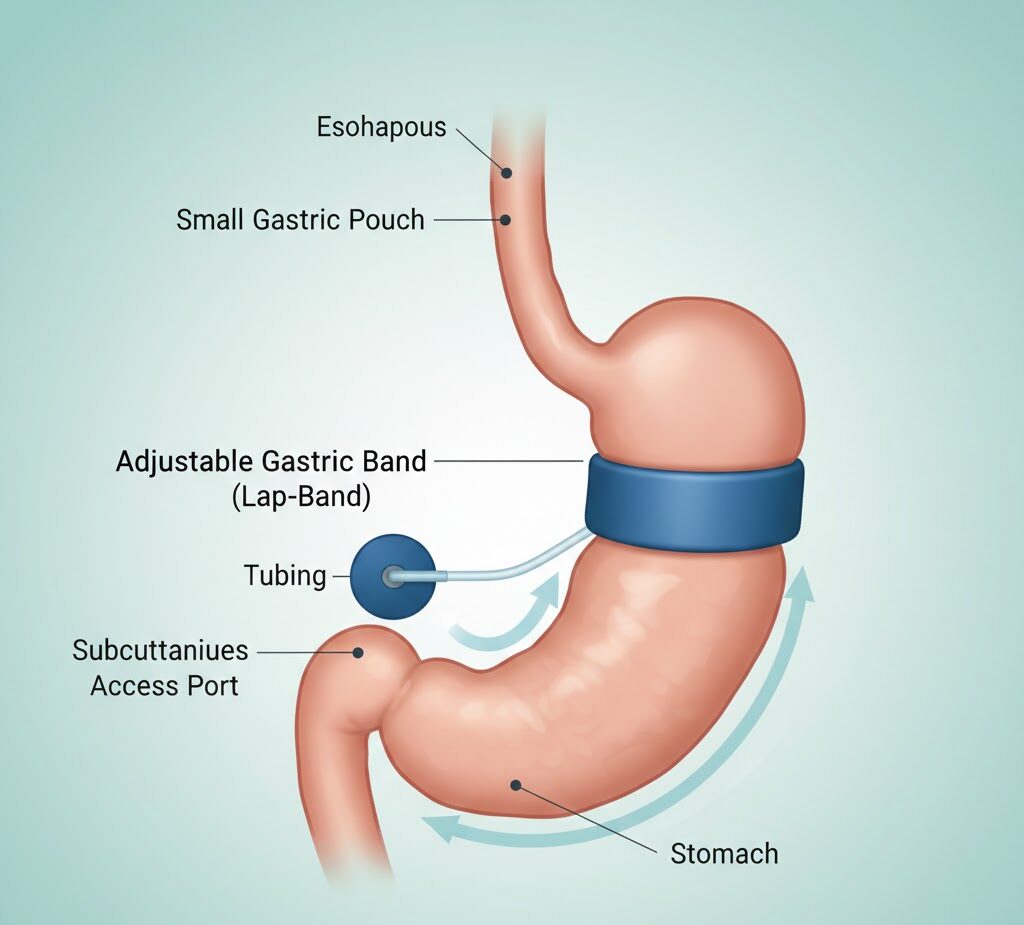
The procedure commonly referred to as the Lap-Band procedure involves placing a silicone ring around the upper portion of the stomach. This ring is adjustable and connected to a port placed just under the skin. As a bariatric option, this stands out because it is considered minimally invasive and reversible, unlike gastric sleeve or gastric bypass surgery.
How Does It Work?
Imagine a belt cinched around the top of your stomach. When the Gastric Band is inflated with saline solution (which is injected through the access port during a simple in-office procedure), it creates a small pouch at the very top of your stomach. When you eat, this small pouch fills up quickly, sending signals to your brain that you are full. Essentially, the band helps you feel satisfied with much smaller amounts of food, which naturally reduces your calorie intake over time.
Because the Lap-Band procedure is typically performed laparoscopically—using several small incisions rather than one large one—patients usually experience a faster recovery time compared to open surgery. This minimally invasive technique is highly appealing to those who may have higher surgical risks associated with more complex operations or those who prioritize reversibility.
The Adjustable Difference
One of the defining features of the Gastric Band is its adjustability. This is why it is often chosen over fixed restrictive procedures. If a patient is not losing weight effectively or is experiencing uncomfortable symptoms like severe reflux or difficulty swallowing, the band can be adjusted. This is done by adding or removing saline solution from the access port.
These adjustments are often called “fills” or “unfills” and are critical to the success of the weight loss tool. A patient will work closely with their bariatric team—including the surgeon and dietitian—to find the “sweet spot” where the band provides effective restriction without causing undue discomfort or nutritional deficiencies. This customization ensures the band works optimally throughout the different stages of the patient’s weight loss journey.
Navigating Your Post-Surgery Weight Loss Journey
While the Gastric Band provides a powerful mechanical tool, it is essential to set realistic expectations. The amount of weight lost with a Gastric Band is generally less than what is achieved with a gastric sleeve or bypass. Patients typically lose around 40 to 60 percent of their excess weight. This success hinges almost entirely on the patient’s commitment to making fundamental lifestyle changes.
The goal of the surgery is not just to restrict food intake; it is to retrain your eating habits and relationship with food. The procedure demands consistent follow-up appointments, dietary discipline, and a willingness to engage in psychological support if needed.
Lifestyle Changes Are Key
Because the band restricts volume, patients must be very careful about the type and texture of food they consume. Eating too quickly, not chewing thoroughly, or consuming dense, fibrous foods can lead to uncomfortable regurgitation or blockages. Post-surgery life means prioritizing nutrient-dense foods, high-quality protein, and slow, mindful eating.
Successful patients understand that the band is a mechanism of accountability, not a miracle cure. They must commit to lifelong dietary monitoring and regular exercise. Regular monitoring by the healthcare team is essential, as the band requires ongoing fine-tuning and assessment for potential complications or adjustments needed to maintain momentum on the weight loss journey.
Potential Downsides to Consider
While the Gastric Band is considered safe, it is not without potential drawbacks. Unlike procedures that permanently alter the digestive tract, the band relies entirely on mechanical restriction. Over time, some patients experience mechanical problems, such as the band slipping out of position or erosion into the stomach wall, though these events are rare.
More common is the simple reality of less impressive weight loss compared to other surgeries. For some patients, the band may provide insufficient restriction, or they may adapt their eating habits by grazing on easily swallowed, calorie-dense liquids or soft foods, thereby undermining the band’s effectiveness. If the band does not result in sustained weight loss or if complications arise, some patients may ultimately decide to have the band removed and perhaps undergo a revision surgery to a sleeve or bypass.
Choosing the Gastric Band is a medical decision that requires deep personal commitment and close collaboration with your medical team. It offers a unique path to managing severe obesity, combining surgical assistance with the ability to maintain the native anatomy of the stomach. If you are looking for a weight loss tool that is adjustable and reversible, and you are fully prepared to commit to the necessary dietary and lifestyle overhaul, the Gastric Band may be the right partner for your transformation. Discuss all your options thoroughly with a qualified bariatric surgeon to determine the best path forward for your long-term health goals.